Cognitive Stimulation Therapy (CST) and ICST
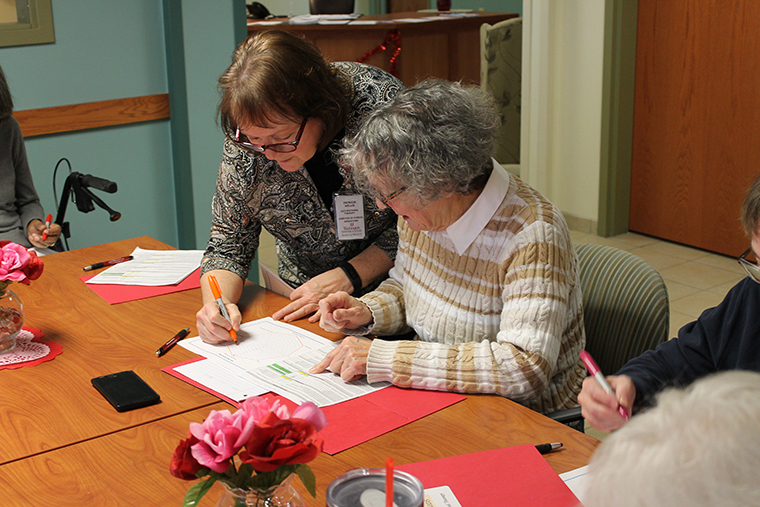
The Cognitive Stimulation Treatment (CST) support group is provided by the Elderly Education Center (GEC) at Saint Louis University.
Evidence-based treatment for individuals with mild to severe dementia is cognitive stimulation therapy (CST). After carefully examining the available study data, Dr. Aimee Spector and a number of dementia specialists created CST in England.
How CST Works
The 14 or more rounds of themed exercises that make up group CST therapy typically occur twice weekly. Sessions are designed to actively involve and excite those who are living with dementia while also offering a superior learning atmosphere and the social advantages of a group. Each session has a broad topic and a variety of activities to suit the group's preferences. Participants choose a moniker for the team. By using the same warm-up exercise, a reality orientation (RO) board (which contains information about the group), and a "theme music," consistency is established between sessions. Despite the fact that CST was intended for quick treatment, study indicates that those who use it regularly can continue to better or at the very least keep improvements for a longer time.
Health care personnel with the necessary training who deal with dementia patients, such as social workers, occupational therapists, speech-language pathologists, and registered nurses, can provide CST treatment. Facilitators of CST groups can be taught by anyone with dementia care expertise. CST organisations can meet in places like nursing homes, hospitals, or daycare facilities.
CST Results
According to research, cognitive performance as assessed by the Mini-Mental State Examination (MMSE) and the Alzheimer's Disease Assessment Scale-Cognitive Subscale ADAS-COG significantly improves after CST. These assessments mainly look at recollection and direction, but they also look at language and visuospatial skills. St Louis therapy Direct comparisons could be established because these outcome metrics are applied to drug studies for dementia. According to analysis, CST is just as efficient as some dementia medications.
Additional studies revealed that CST significantly improved linguistic abilities such as naming, word-finding, and understanding. As measured by the subjects themselves using the QoL-AD, CST has significantly improved quality of life. Research demonstrates that the quality of life of these dementia patients' caretakers was also enhanced. Key themes emerged from conversations with CST participants and their caretakers about their impressions of the sessions, including changes in mood, confidence, and focus as well as positive experiences of being in the groups because of the environment's support and lack of danger.
Cognitive Stimulation Therapy Training Institute (CSTTI)
The Gateway Geriatric Education Center at Saint Louis University established a CST teaching and training staff in 2014. The team has trained and educated hundreds of health care and social service workers, students, and caretakers in CST since 2015, which has resulted in the creation of the CST Training Institute (CSTTI).
Main Objectives of CSTTI
The goal is to build CSTTI in cooperation and consultation with the University College London team that created the initial CST. The center's primary goals are to create and put into practise a uniform programme and assessment system for teaching CST facilitators and trainers of facilitators.
To create a leadership framework for CST training in the US and Canada in order to guarantee the accuracy and excellence of programme execution.
To modify the CST guides so that:
- Be aware of member groups' cultures.
- Include instruction and execution guidance
on the creation and upkeep of a roster or registry of people who have finished and kept up CSTTI facilitator or training programs. St Louis therapist (Are presently accepted)
to disseminate details about CST instructional tools and CST interventions.
to create a useful assessment technique that will allow the CSTTI to become a useful paradigm for global adoption.
CSTTI Governance
The core group, comprised of representatives from Perry County Memorial Hospital, A.T. Still University, Saint Louis University, and the initial creators at University College London, oversees the CSTTI. The core group is in charge of, among other things, the following:
- developing a software continuously
- Processes for reaching decisions
- Roles/responsibilities
- additional tasks as needed
- Variations of CST
Exercise-Based CST:
We have established groups that integrate physical activity into CST programmes. A warm-up practise can always be a useful beginning action for many conventional CST groups. These practises are primarily used in exercise-based CST to get the body moving and activate memory and the brain. To improve cognition and mobility, groups can frequently participate in chair exercises, share a ball throw, and other stretches.
Spiritual CST:
For many older people, particularly when their memory begins to deteriorate, spirituality and religion are significant coping mechanisms. Faith-based topics have been incorporated by SLU and other community allies into the CST activities of their organisations. A "spiritual toolkit" has also been created by the groups, where members can keep texts, hymns, pictures, and other objects that represent their spiritual coping.
Caregiver Groups for CST Participants:
A collection of carer process groups known as "Caregiver-Assisted CST" was developed by SLU and runs in parallel with CST. These process groups support carer education regarding the topics covered in the CST groups for their loved ones. Additionally, carers can incorporate CST activities with their loved one at home and ruminate personally on their experience as a carer.
Individual Cognitive Stimulation Therapy
Individual Cognitive Stimulation Therapy (iCST), a one-on-one strategy for dementia patients, is founded on evidence-based group therapies. The iCST offers recommendations for arranging theme-based sessions in a way that actively engages the user and creates the best learning atmosphere.

Comments
Post a Comment